Table of Contents
- The Radical Zine That Couldn't
- The Structural Imbalance
- The Cascade of Dependencies
- The False Solution
- What Doesn't Work
- Enter irl.coop: Groups as First-Class Citizens
- The Power of Composability: Groups of Groups
- Beyond Multi-Sig
- The Choice We Shouldn't Have to Make
The Radical Zine That Couldn't
Imagine a collective of writers and artists creating an edgy zine about radical change. They don't trust institutions. They reject extractive economic systems. They're aligned on the need for transformation, even if they differ on strategy and the tension between making money and promoting ideals.
But here's the irony: their collaboration is built on the same extractive power structures they're fighting against.
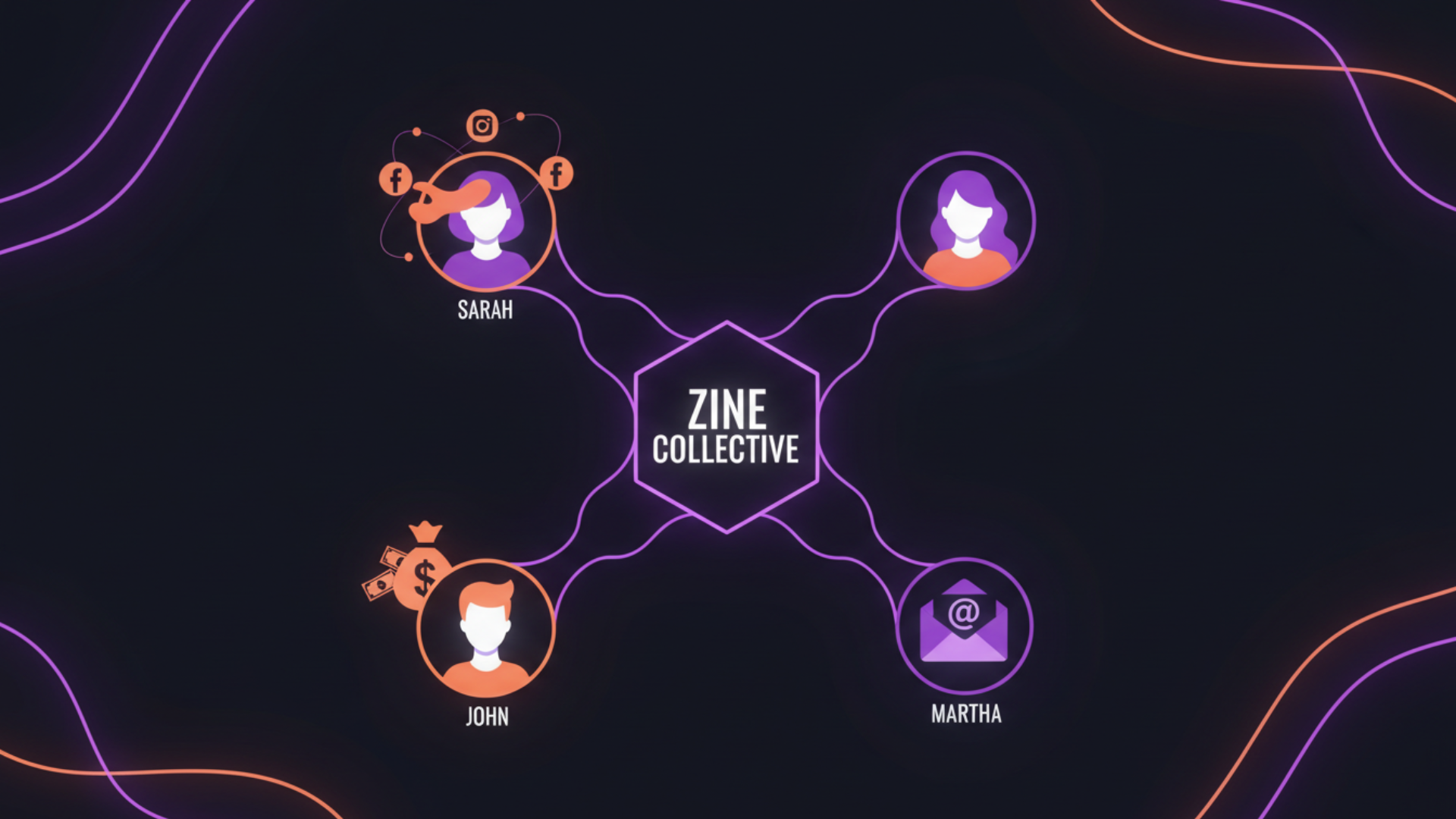
Sarah created the social media accounts—Instagram, Facebook, Twitter/X. She controls the passwords. John fronts the printing costs and sells zines at bookstores and events. He physically holds the cash. Martha set up the Mailchimp account and designs the newsletter, which has a completely different aesthetic from everything else.
Each of them is a gatekeeper. And game theory tells us this setup cannot possibly be fair.
The Structural Imbalance
Digital ownership is tied to individuals, not initiatives. This creates an unavoidable power imbalance.
When Sarah created those social accounts, they became hers—legally, technically, practically. It doesn't matter that she created them "for the collective." The platforms don't recognize collectives. They recognize individuals with passwords.
This creates an unavoidable power imbalance. Sarah becomes the de-facto gatekeeper of the zine's digital presence, regardless of whether she's a good actor or a saboteur. The structure itself creates three failure modes:
- Malicious action: She could delete all content, make unauthorized posts, or lock everyone out
- Passive obstruction: She could slow down updates, refuse to post approved content, or simply burn out and disappear
- Security breach: She could give access to an unapproved third party, lose her password, or get hacked
The same applies to John with the cash and Martha with the email list. Each gatekeeper creates a single point of failure.
The Cascade of Dependencies
But it gets worse. These gatekeepers don't operate in isolation—they create a web of dependencies:
- The collective votes to spend money on a Facebook ad campaign. Sarah won't post it. John won't release funds because "Sarah isn't doing her part." Deadlock.
- John says he sold 50 zines and hands over $100. But did he really sell 50? At what price? The collective has no way to verify. Opacity.
- Sarah burns out and stops posting. Engagement drops. Sales drop. John asks, "Why should I keep fronting printing costs?" The whole thing collapses. Cascade failure.
Meanwhile, Martha's newsletter has a different aesthetic. She doesn't have time to keep it updated. The brand is fragmented. The workflow is broken.
Without facilitated moderation to identify problems in power-sharing and decision-making, the zine is destined for a limited run.
The False Solution
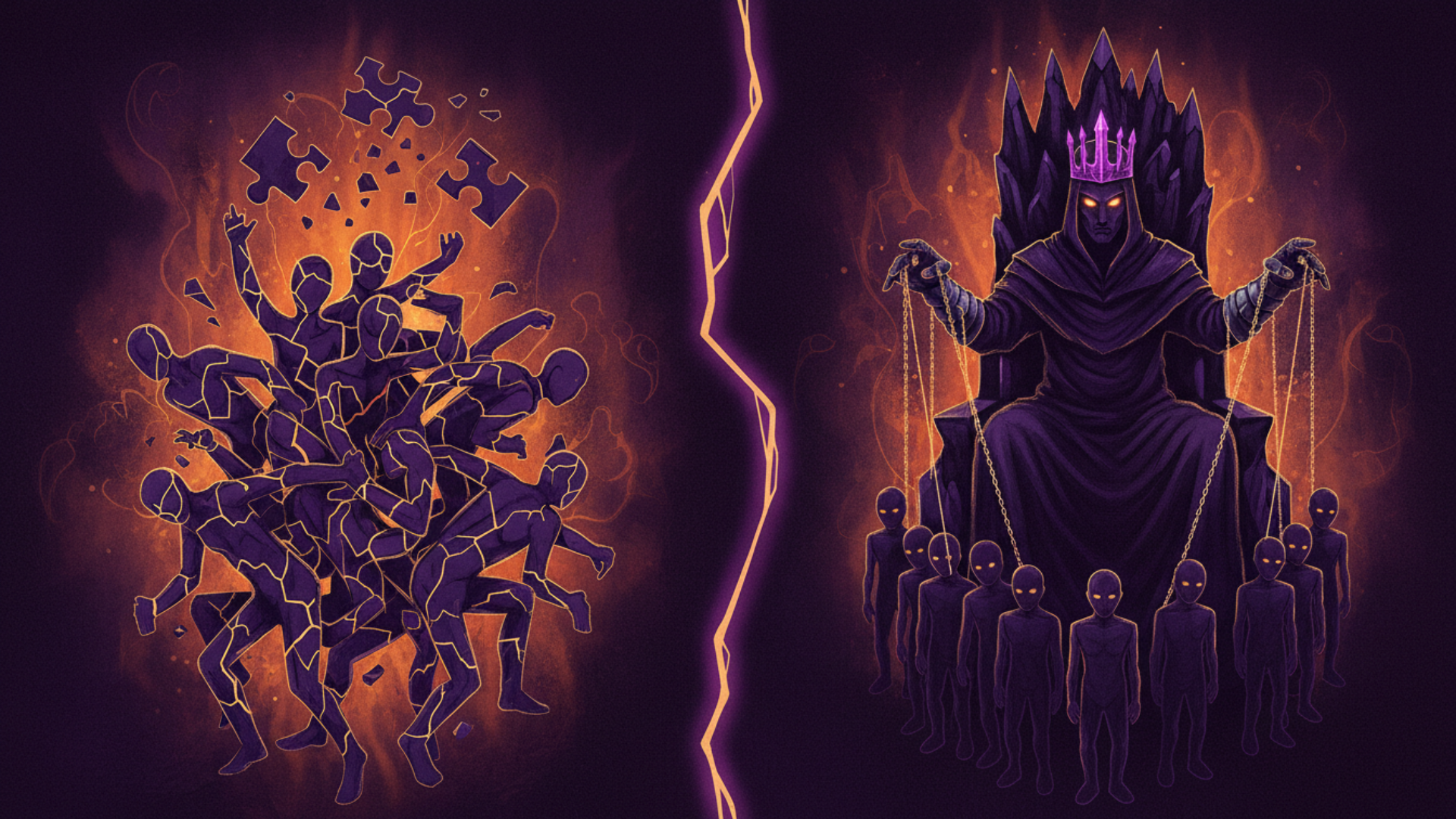
You know what works? Autocracy.
Other zines succeed by having one well-resourced person run the entire operation like a fiefdom. They never give up the passwords. They treat the organization like their personal enterprise. Their vision trumps everyone else's.
It works. But it's not cooperation—it's benevolent dictatorship.
So we're left with a brutal choice:
- Cooperative chaos: Multiple gatekeepers, misaligned aesthetics, burnout, eventual collapse
- Benevolent dictatorship: One person controls everything, "succeeds" by abandoning democratic ideals
Current digital infrastructure forces us to choose between true cooperation (which is structurally doomed) and autocracy (which works but betrays cooperative values).
What Doesn't Work
Groups try to solve this. They really do.
Shared passwords? Security nightmare. Plus, someone still knows the password first. They're still the gatekeeper—they just pinky-promised to share.
Form an LLC? Too expensive. Too much paperwork. Too much overhead for a radical zine that rejects institutional structures.
Just trust each other? Game theory says this will be exploited. Not because people are bad, but because the structure creates an imbalance that must be exploited. Even good actors burn out, disappear, or have disputes.
Talk it out? Doesn't solve the structural problem. You can have all the meetings you want—Sarah still controls the Instagram.
Enter irl.coop: Groups as First-Class Citizens
This is why I'm building irl.coop.
Groups need to be first-class citizens in digital infrastructure, not just collections of individuals.
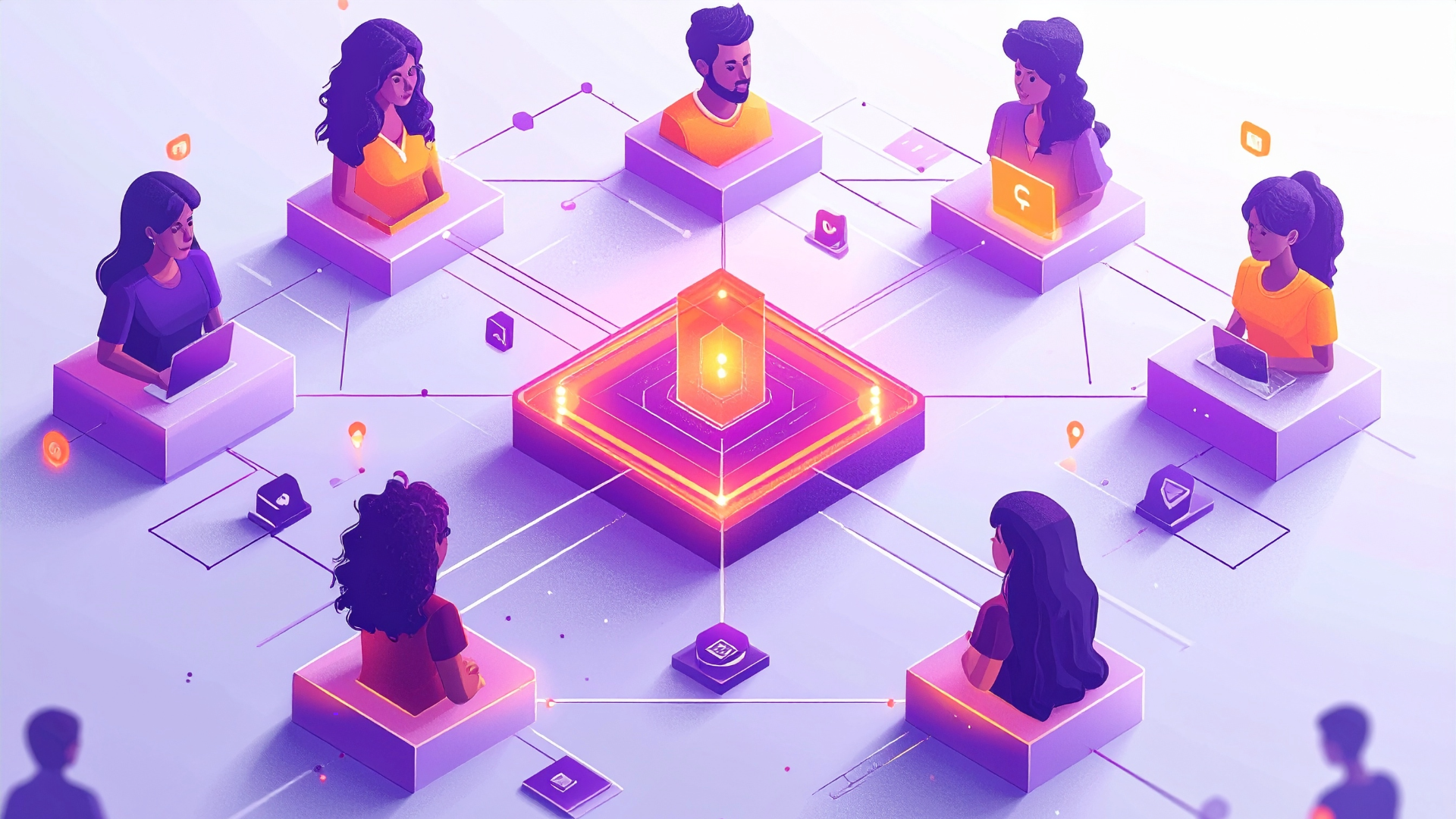
Imagine if the zine collective could create a mini-DAO—a group entity that owns the social accounts, the email list, the treasury. Not Sarah's Instagram that she shares. Not John's cash box. Not Martha's Mailchimp. The collective's infrastructure.
Here's how it works:
Group-Owned Digital Infrastructure
The collective creates a irl.coop group. That group owns:
- Social media accounts (Instagram, Facebook, Twitter/X)
- Email infrastructure (Mailchimp or equivalent)
- Bank account or crypto treasury
- Domain name, website, any other digital assets
Sarah, Martha, John, and other members can all access and use these resources. But no single person can lock everyone else out.
Transparent, Auditable Treasury
John's cash sales get recorded on-chain. Every transaction is visible to the collective. When funds need to be distributed, it requires multi-signature approval—not John's unilateral decision.
The collective can see: "We sold 50 zines at $5 each, collected $250, spent $100 on printing, distributed $150 to contributors." No opacity. No trust required.
Governance for Disputes
When Sarah and John disagree on strategy, there's a mechanism to resolve it. The collective can vote. Decisions are enforced by smart contracts, not by whoever controls the password.
Composable and Ephemeral
Groups can be created, merged, nested, and destroyed as needed. The zine collective might create sub-groups for different issues, merge with another publication for a special edition, or dissolve when the project ends—all without losing control of shared resources.
The Power of Composability: Groups of Groups
But here's where it gets really interesting: groups can own things together with other groups.
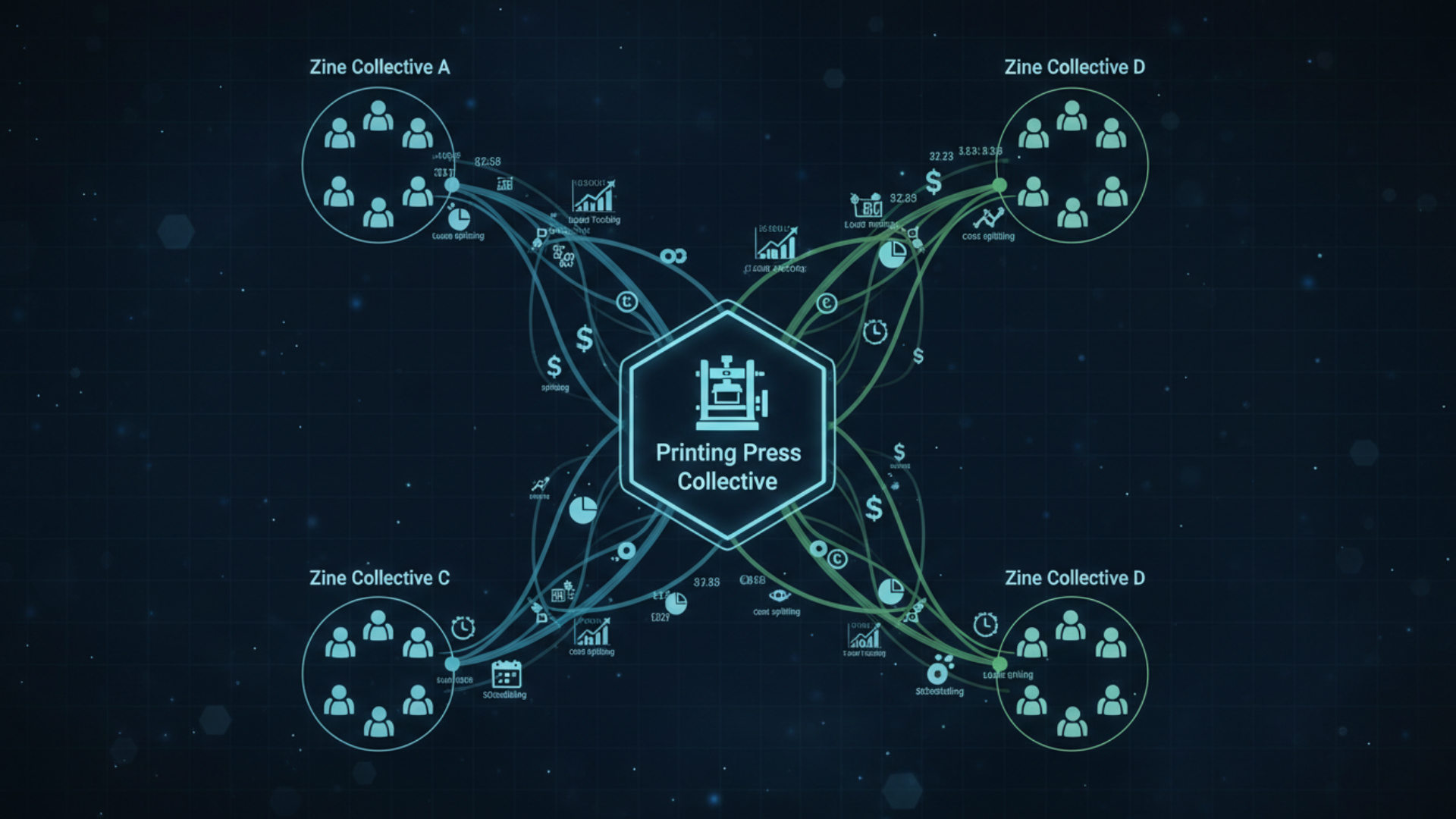
Imagine four different zine collectives in the same city. Some members overlap between collectives. Each collective operates independently with its own mini-DAO managing its social media, treasury, and email list.
But printing is expensive. A professional-grade printing press costs tens of thousands of dollars. Storage space costs money. Maintenance costs money. No single collective can afford it.
So they create a meta-group: a collective of collectives that jointly owns the printing press.
Shared Infrastructure Without the Tragedy of the Commons
Through irl.coop, this meta-group can:
Track material usage: Each collective's print jobs are logged on-chain. "Collective A used 500 sheets this month. Collective B used 200. Collective C used 800."
Manage maintenance costs: When the press needs a $500 repair, the meta-group treasury automatically splits the cost proportionally based on usage. No arguments about who should pay more.
Coordinate scheduling: The press is a shared resource. The meta-group can implement booking rules, usage limits, and conflict resolution—all enforced by smart contracts, not by whoever happens to have the key.
Handle storage and location: Rent for the space where the press lives is split among the collectives. If one collective leaves, the others can vote to bring in a new member or absorb the cost.
Manage pickup and distribution: Track who picked up which print jobs, when materials were delivered, who has access to the space.
Advantages of Scale Without Centralization
Economies of scale without hierarchy—groups collaborating as equals, managing shared resources transparently, without gatekeepers.
The four collectives get access to professional printing equipment they could never afford individually. They share costs. They share maintenance. They share expertise.
But no single collective controls the press. No individual gatekeeper can lock everyone out. The meta-group operates transparently, with clear rules enforced by code.
And if a collective wants to leave? They can exit cleanly. Their share of the meta-group treasury gets returned. The remaining collectives continue operating.
Beyond Printing Presses
This model works for any shared infrastructure:
- Community workshops: Multiple maker collectives sharing tools, space, and materials
- Shared vehicles: Neighborhood groups co-owning a cargo van for deliveries
- Cooperative telecom: Communities pooling resources for internet infrastructure
- Land trusts: Multiple housing co-ops jointly owning and managing land
- Renewable energy: Neighborhood solar networks with shared battery storage
The pattern is the same: groups collaborating as equals, managing shared resources transparently, without gatekeepers.
Beyond Multi-Sig
This isn't just multi-sig wallets for crypto. It's full digital agency for groups.
Groups can own email accounts, domain names, social media, phone numbers, cloud storage—anything an individual can use digitally. They can wrap legal structures like LLCs or cooperatives. They can manage both digital and physical resources.
It's infrastructure that enables the solidarity economy to thrive—where communities can self-organize without relying on extractive intermediaries or autocratic gatekeepers.
The Choice We Shouldn't Have to Make
Right now, small collaborations face an impossible choice: fail cooperatively or succeed autocratically.
But this isn't inevitable. It's a consequence of digital infrastructure designed for individuals, not groups.
We can rebuild it. We can create systems where cooperation isn't structurally doomed. Where gatekeepers don't exist because ownership is genuinely shared.
That's what irl.coop is for.
Want to follow the project? I'm documenting the journey on Substack and building in public. If you've experienced the gatekeeper problem in your own collaborations, I'd love to hear about it.
The future of cooperation depends on infrastructure that makes it possible.
Written by
irl.coop
hello@irl.coop